
Missouri treats cyclists as drivers with the same rights and duties. Here is how fault is decided when a car hits a bike in St. Louis.
A cyclist has almost no protection in a collision with a car. When a crash happens, injuries are often serious, and the driver’s insurer frequently tries to shift some blame onto the rider.
Missouri law does not start from the assumption that cyclists are at fault, or that drivers are. Fault is decided the same way it is between two cars: by who followed the rules of the road and who did not.
FREE CASE EVALUATION
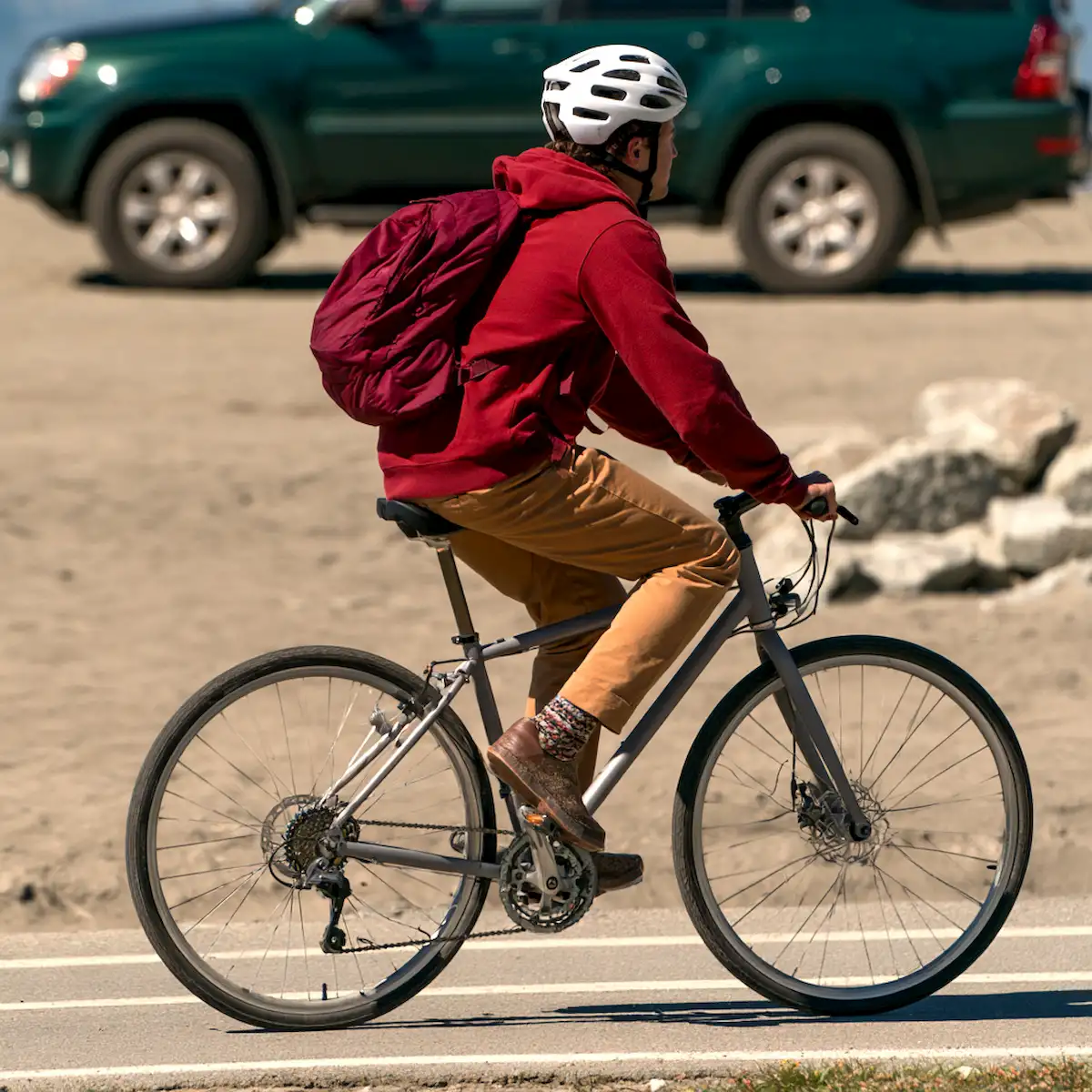
Missouri’s Rules of the Road for Cyclists and Drivers
Under Missouri law, a person riding a bicycle on a street has the same rights and duties as the driver of any other vehicle, with a few bicycle-specific rules:
- Ride with traffic, in the same direction as cars.
- Ride as far right as is safe. The law makes exceptions for left turns, avoiding hazards, lanes too narrow to share with a car, and one-way streets. A cyclist may use the shoulder but is not required to.
- Signal turns by hand.
- Use lights at night. Bicycles need a white front light and a red rear light or reflector after dark.
Drivers have duties toward cyclists too. Missouri law holds every motor vehicle driver to the highest degree of care. A driver passing a cyclist must leave a safe distance and keep that clearance until safely past. Drivers must yield to cyclists the same way they yield to any other vehicle with the right of way.
Common Bike Crashes and Where Fault Usually Falls
Every crash turns on its facts, but certain patterns come up again and again:
- Right hook. A driver passes a cyclist, then turns right across the cyclist’s path. The driver who turns into a rider going straight usually bears responsibility.
- Left cross. An oncoming driver turns left in front of a cyclist going straight through an intersection. This is one of the most common serious bike crashes, and the turning driver generally must yield.
- Unsafe passing. A driver passes too close, clips the rider, or forces the cyclist off the road. Missouri’s safe-distance rule addresses this directly.
- Dooring. A parked driver or passenger opens a door into a cyclist’s path. The person opening the door typically has a duty to check for approaching traffic first.
- Rear-end and distracted driving. A driver who strikes a cyclist from behind, often while looking at a phone, is usually at fault.
- Failure to yield from driveways and side streets. Drivers pulling out often look for cars and miss the narrower profile of a bike.
The common thread is that drivers often say they never saw the cyclist. Under Missouri’s highest degree of care, failing to see a cyclist who was there to be seen generally does not excuse the driver.
When Fault is Shared
Missouri follows pure comparative fault. If a cyclist is found partly responsible, the recovery is reduced by that percentage, but it is not barred. A rider found 20 percent at fault can still recover the remaining 80 percent of the damages. Insurers commonly raise these arguments against cyclists:
- No helmet. Missouri has no statewide helmet law for adult cyclists. A helmet argument, if raised, goes only to head injuries and generally requires proof that a helmet would have changed the injury. It does nothing for a broken leg or a spinal injury.
- No lights at night. Missing lights or reflectors after dark can be a real issue, because the law requires them. You still have to show that the missing light contributed to the crash.
- Riding on the sidewalk. Sidewalk rules vary by city in the St. Louis area. Where sidewalk riding is allowed, a driver crossing a sidewalk at a driveway still owes a duty to look.
- Riding in the lane. Taking the lane is often lawful under Missouri’s “as far right as is safe” rule, especially where a lane is too narrow to share.
Our article on how fault is determined in pedestrian accidents covers how these same principles apply to people on foot.
Evidence, Coverage, and What To Do Next
Bike crash cases are often decided by evidence that disappears quickly:
- Helmet camera, dashcam, doorbell, and business security footage
- Photos of the scene, the vehicle damage, your bike, and your injuries
- Witness names and phone numbers
- The police report and any statements the driver made at the scene
- Your bike, helmet, and clothing, kept as they are after the crash
- Ride-tracking app data showing your route, speed, and time
The driver’s liability insurance is usually the first source of recovery. When that coverage falls short of serious injuries, the cyclist’s own auto policy may also provide uninsured or underinsured motorist coverage, even though the rider was on a bike, not in a car.
Get medical care right away, keep every record, and be careful about talking with the driver’s insurer. Our guide on recorded statements explains why. Most Missouri injury lawsuits must be filed within five years. Our article on Missouri filing deadlines covers the details.
Talk to a St. Louis Bicycle Accident Lawyer
If a car hit you on your bike and you were seriously injured, The Hoffmann Law Firm can review how the crash happened, respond to the insurer’s fault arguments, and look for every available source of coverage. Since 1998, our practice has focused only on motor vehicle injury cases, and you will work directly with Attorney Christopher Hoffmann.
Call (314) 361-4242 for a free consultation, or send us a few details. No fee unless we recover compensation for you. You can also learn more about our St. Louis bicycle accident practice.
FREE CASE EVALUATION