
Missouri’s hands-free law makes phone use easier to spot, but it still has to be proven. Here is how phone records, video, and vehicle data build the case.
Phone use behind the wheel is common, and it is almost never admitted at the scene. A driver who looked down at a text for two seconds will usually say the light was green, the car came out of nowhere, or they never saw the pedestrian. When distraction caused a crash, it has to be proven with evidence.
FREE CASE EVALUATION
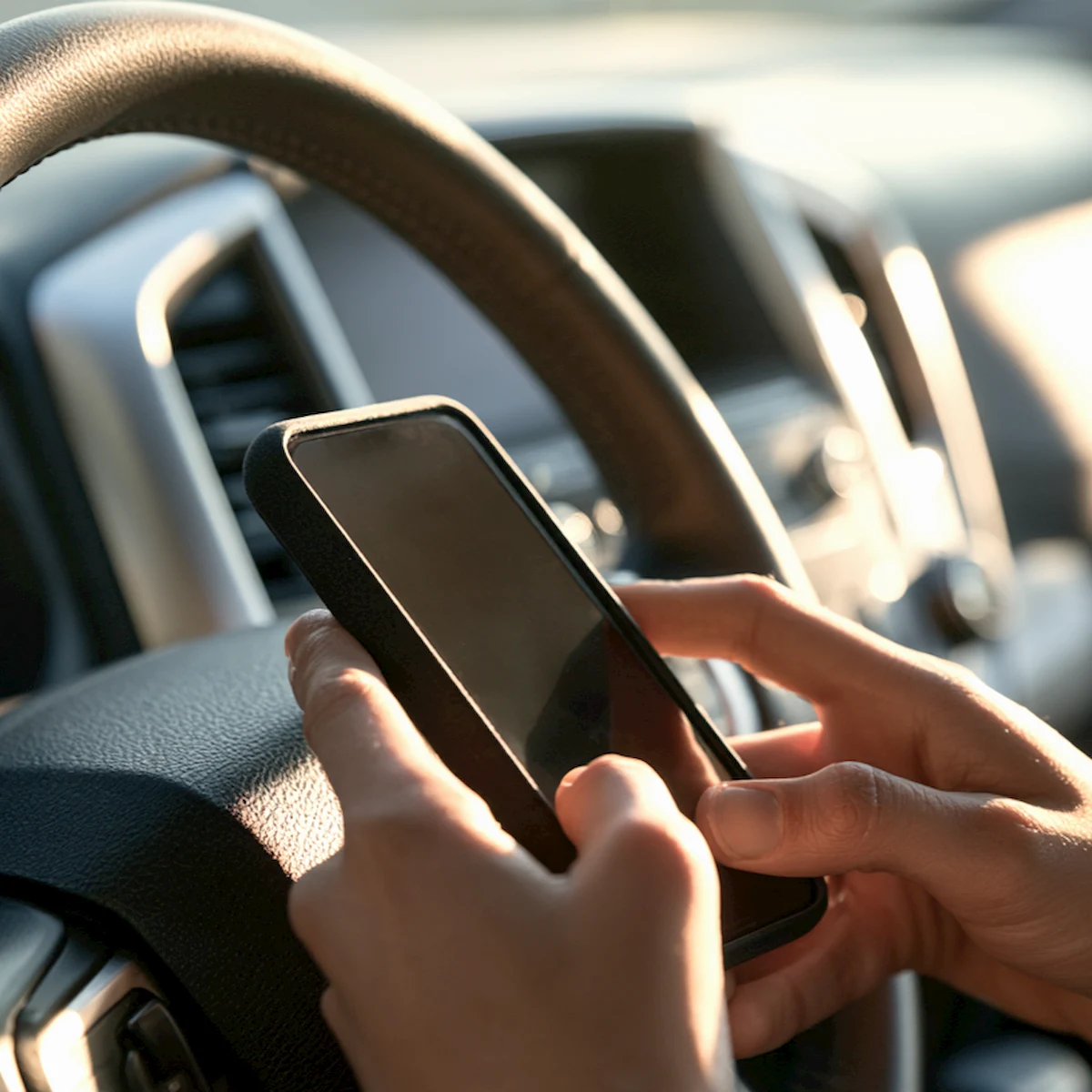
Missouri’s Hands-Free Law Sets the Rule of the Road
The Siddens Bening Hands-Free Law (RSMo 304.822) took effect on August 28, 2023, and officers began writing citations on January 1, 2025. It replaced an older law that banned texting only for drivers 21 and younger. Now, drivers of all ages may not hold or support a phone while driving, type or read messages, or watch, record, or post videos.
The law allows voice-operated and hands-free use, and it does not apply while a vehicle is lawfully stopped or parked or when a driver is reporting an emergency. It is a secondary offense, so police cannot pull someone over for it alone.
In a civil injury claim, a violation does not, by itself, establish fault. It can be strong evidence that a driver was not paying the attention required by Missouri law, and the real question remains whether the phone use caused the crash.
Evidence From the Scene and the First Days
The earliest evidence is often the most honest:
- The police report. Missouri crash reports list contributing circumstances, and officers can note inattention, a phone in hand, or a driver’s own explanation.
- Statements. A driver may admit “I just looked down for a second” to police, paramedics, or bystanders before thinking it through.
- Witnesses. Other drivers and passengers may have seen a phone, a head bent toward a lap, or a car drifting before impact.
- Video. Dashcams, doorbell cameras, business security cameras, and traffic cameras can show where a driver was looking. Much of this footage is recorded over days or weeks.
- Physical evidence. Missing skid marks, a late swerve, or a rear-end crash into stopped traffic can indicate a driver who was looking elsewhere.
If you are able, write down the witnesses’ names and numbers, and note any nearby cameras. A photo of the inside of the other car showing a phone on the seat or in a mount can matter later.
Phone Records, App Data, and Vehicle Data
The strongest proof usually comes from the records themselves:
- Carrier records. Wireless carriers keep logs showing the time of calls, texts, and data sessions. They usually show activity rather than the content of messages.
- App and account activity. Social media posts, messages, and app usage carry timestamps that can be matched to the crash.
- The phone itself. A forensic examination can show what the device was doing in the minutes before impact. This usually requires the driver’s agreement or a court order and is typically limited to a narrow time window.
- Vehicle data. Event data recorders capture speed, braking, and steering in the seconds before a crash. Some infotainment systems also log Bluetooth calls and connected-phone activity.
These records are matched against a timeline. The first 911 call, the vehicle data, and video can pinpoint when the crash happened. A text sent seconds before impact tells a very different story than one sent minutes earlier. Records like these are typically obtained through a subpoena or formal discovery once a lawsuit is filed; the other side cannot simply be asked to hand them over.

Commercial and On-The-Job Drivers
Federal safety rules prohibit truck and bus drivers from texting or holding a phone while driving a commercial motor vehicle. A trucking company may also keep its own records: dispatch messages, fleet tracking, and inward-facing cameras that record the driver.
When a driver was on a work call or answering a dispatcher, the employer may share responsibility for the crash. Our article on who is liable in a truck accident in Missouri explains how that works.
Preserving Evidence and the Missouri Rules that Apply
Phone and video evidence can disappear. Carriers keep records for limited periods that vary by company; footage is recorded over time, and vehicles are repaired or salvaged. A preservation letter sent early puts the other driver, their insurer, and any employer on notice to keep it.
A few Missouri rules also shape the claim:
- Pure comparative fault. If the other driver was texting but you were also partly at fault, your recovery may be reduced by your share of fault, but it is not barred. Our article on how fault is determined in St. Louis pedestrian accidents walks through how fault gets divided.
- Deadlines. Most Missouri injury claims must be filed within five years of the crash. See how long you have to file a car accident claim in Missouri.
- Recorded statements. Before talking with a lawyer, avoid giving a recorded statement to the other driver’s insurer.
Talk with a St. Louis Car Accident Attorney
If you were seriously injured by a driver you believe was on their phone, you work directly with Attorney Christopher Hoffmann, not a case manager. We move early to preserve phone, video, and vehicle evidence and pursue the maximum available insurance recovery. Learn more about our work as a St. Louis car accident attorney.
Call (314) 361-4242 for a free consultation, or send us a few details. There is no fee unless we recover compensation on your behalf.
Every case is different; results depend on the facts. This article is general information, not legal advice.
FREE CASE EVALUATION